
 Chinese
Suspension and wheel assembly define off-road capability. Tires, wheels, lift kit and skid plates need matched setup. Single part upgrade often causes compatibility problems.
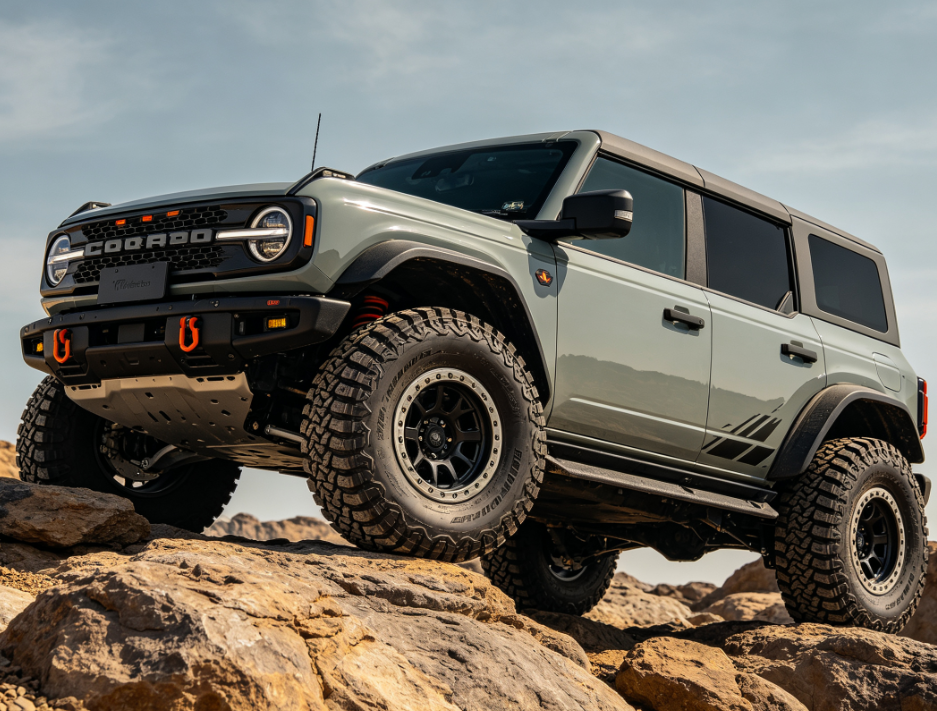
1. Tires & Wheels
AT all-terrain tires balance highway and dirt performance, best for long-distance overlanding. MT mud tires feature aggressive tread for mud and rock but produce loud road noise and faster wear. Dedicated snow tires are required for icy terrain. Wheel ET offset needs careful selection. Wide wheels may rub inner fender. Larger tire upgrade requires wheel arch clearance check; fender liner trimming may be needed on some models.
2. Suspension lift
Excessive lift brings more drawbacks. 1–2 inch mild lift increases ground clearance with minor impact on factory suspension geometry, suitable for most cross-country users. 2.5 inch+ heavy lift requires upper control arms and track bar plus wheel alignment to prevent tire scrub, highway shake and steering pull. Higher lift raises center of gravity and reduces on-road stability.
3. Chassis skid plate kit
Manganese steel delivers strong impact resistance for rock crawling. Magnesium aluminum is lightweight for long-distance travel. Service cutouts are essential for routine maintenance without full disassembly. Recheck skid plate bolts regularly. Inspect deformation after rock impact to avoid squeezing oil pan or gearbox.
Tips: Larger tires plus suspension lift will change speedometer reading and affect ABS / ESP logic. Wheel alignment and function test are required after modification.